

SRF embraces networking and research collaborations as a key strategy for building synergies towards achieving its Vision and Mission. These networks opens new platform for research, innovations and training opportunities beyond SRF can provide that benefit the young African Researchers and innovators in and outside Higher Education Institutions (HEIs). To address the research capacity limitations in Africa, SRF promotes responsible collaboration practices in research. The organization collaborates with individual researchers, organizations, governments, and institutions of higher learning to mobilize resources for research.
Below are some of such Networks or Consortiums initiated or Chaired by SRF or to which SRF is an intermediary/Contact institution for other HEIs in Africa.
National TB and Leprosy Research forum for Uganda
SRF Research and Training Centres through its executive Director, Co-Chairs the National TB and Leprosy Research forum under the National TB and Leprosy program of the Ministry of Health. This forum is responsible for research generation, tracking and translation into policy and incorporating research evidence in the National Strategic Plan. We also track and offer a monthly platform for researchers to present their planned, ongoing and completed research for input by the policy makers.
Research partnerships Universities
SRF-RTCs has an over a decade- long partnership with Mbarara University of science and Technology (a public university) and has completed a number of contracts for Research design and research implementation and research trainings for both lecturers and students. SRF-RTCs have from time to time hosted postgraduate students for special research trainings and mentorship.
Research training partnerships Universities
SRF has collaborated with Mbarara University, Epicentre and University of Montpellier in facilitating the Clinical Trials training Program for researchers and postgraduate students that has been running for now 6 years under the department of Community Health (Masters in Public Health). In addition, we offer clinical trial trainings to innovators and biomedical engineers who grossly lack these skills despite their engagement in medical device development that demands implementation of device validation studies and clinical trials especially for Class B, C and D devices.
Research ethics and regulatory engagements
SRF-RTCs has a partnership with the National research regulatory bodies, that is Uganda National Council of Science and Technology (UNCST) and Mbarara University Research Ethics Committee that approve research and develop research guidelines.
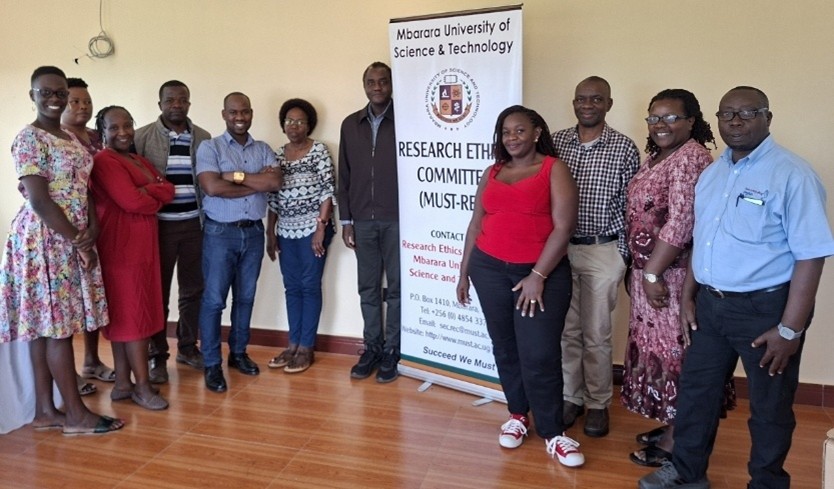 We are adequately represented in the Research ethics and regulatory ecosystem with two of our members (Dr Atwine Daniel and Caroline Birungi) serving as members on the Mbarara University of Science and Technology Research Ethics Committee.
This is in addition to the previous engagements some of our researchers (Dr Atwine Daniel) have had as member of the national task force (at Uganda National Council of Science and Technology) for developing national research guidelines e.g Community Engagement guidelines that apply to all research to be conducted in the country GUIDELINES FOR COMMUNITY ENGAGEMENT AS AT 9TH FEBRUARY 2022 (3).pdf (uncst.go.ug).
Research collaboration with Uganda RedCross Society (URCS)
The SRF Research and Training Centres (SRF-RTCs) and its affiliated Soar Research Foundation Limited (SRF) entered into a strategic Memorandum of Understanding (MoU) with the Uganda Red Cross Society (URCS) to strengthen collaboration in multidisciplinary research, innovation, and humanitarian action in Uganda.
This collaboration expanded SRF’s geographic reach, access to our target populace and widen our research areas. The MoU was officially signed on August 6, 2025, marking a milestone in cross-sectoral partnerships aimed at addressing some of Uganda’s most pressing development and humanitarian challenges. The collaboration focuses on joint pursuit, preparation, submission, and implementation of grant-funded initiatives across a wide range of priority sectors including Health, Education, Disaster Risk Management, Water, Sanitation and Hygiene (WASH), Food Security, Climate Change Adaptation, and Refugee Response among others. This partnership underscores the growing need for research-driven, community-informed, and evidence-based action in Uganda’s humanitarian and development spaces. The collaboration aims to bring scientific rigor and local relevance into every intervention that touches the lives of vulnerable populations. The key components of the collaboration include: 1) Joint development and implementation of grant proposals across thematic areas. 2) Exchange of research materials, documentation, and technical resources aligned with shared objectives. 3) Mutual capacity strengthening in research and proposal development to improve funding success and project quality. 4) Use of research findings for publication, policy advocacy, and evidence-based programming at scale. 5) Youth empowerment and capacity building, particularly through URCS branches like Mbarara, in alignment with national priorities. 6) Flexibility to engage in additional joint initiatives that emerge over the course of the partnership.
Global South Trials Network (GLISTEN)
SRF is a founder member and has the Chair of the Executive Steering Committee that oversees the Consortium. GLISTEN is a consortium of leading research organizations and scientists committed to solving the most urgent and neglected health challenges across the Global South through regionally prioritized clinical trials.
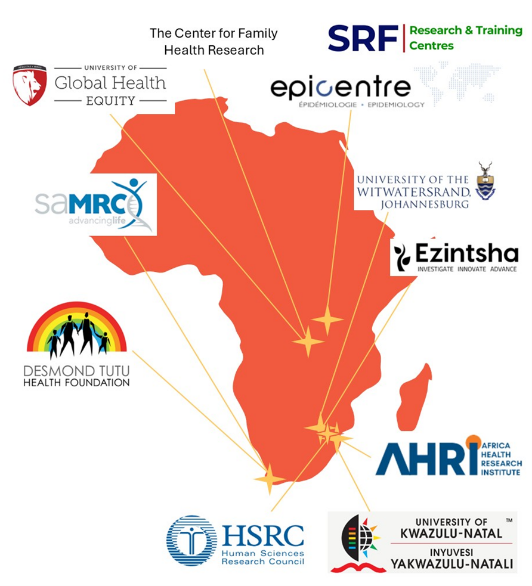
Our Vision: Thriving and healthy African communities, unburdened by non-communicable diseases.
Our Mission (Three-part):
1) Encourage Global South Collaboration: Facilitate strategic partnerships across the Global South to promote collective action and knowledge exchange.
2) Foster Research Capacity: Build the next generation of African scientists and strengthen research infrastructure to drive sustainable, locally led scientific progress.
3) Evaluate NCD Interventions to inform policy and global development goals: Lead outstanding research to evaluate interventions that will shape policy and contribute to global development goals.
HARI-Uganda Consortium
Initiated by SRF and Co-led with Uganda RedCross Society as part of their strategy for sustainable implementation of the goals of their research collaboration. HARI stands for “Humanitarian Action and Research for Internally Displaced Persons (IDPs) and Refugees in Uganda”. HARI-Uganda is a national, multi-stakeholder collaboration platform established to promote research, innovation, and evidence-based action among refugees and IDPs in Uganda. It brings together research institutions, humanitarian actors, government agencies, and refugee-led organizations(Youth Inclusion Network-Uganda, Community Empowerment for Creative Innovation, Unleashed Potentials in Motion, UHURU/Promise Hub & Unidos Social Innovation Centre) to co-create sustainable solutions tailored to complex and dynamic humanitarian settings. Vision: “An Africa where refugee and displaced communities live healthy, dignified lives, supported by innovative, evidence-based, and equitable systems”. Mission: “To catalyze high-quality research, innovation, policy engagement, and systems strengthening that addresses the health and wellbeing of refugees, host communities and IDPs in Africa through collaborative, inclusive, and sustainable approaches”.